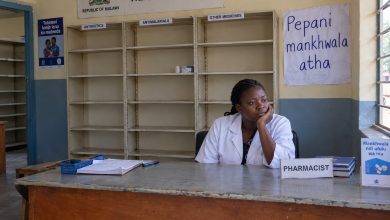
Health experts have warned that the country is on a dangerous path towards a severe shortage of midwives by 2030, a situation that threatens the quality of care for mothers and newborn babies.
This was raised by the Association of Malawian Midwives (Amami) during a workshop in Lilongwe yesterday and it follows a new United Nations report showing Malawi’s midwife density has dropped sharply from 7.7 to 5.3 for every 10 000 people since 2022.
The UNFPA State-of-the-World Midwifery Report 2024 for Eastern and Southern Africa projects that if nothing changes, the country will have the worst shortage by 2030, needing an estimated 16 400 dedicated midwives but on track to have only about 6 600.

situation by 2030. | Ntchindi Meki
A separate survey that Amami conducted in March 2025 found that over 90 percent of midwives complain of poor working conditions, with 87 percent citing poor pay and severe understaffing in health facilities.
In an interview yesterday, Amami chief executive officer Mathias Ghatsha Chatuluka said the situation is dire, with serious consequences if no action is taken.
He said: “If Malawi does not intervene to fix these shortages, the country will be in a very precarious situation by 2030.
“There will be too few hands to provide care for mothers and new-borns and this will compromise the quality of midwifery care.”
Chatuluka also pointed to a further contradiction, saying fully trained midwives are out of work while health centres are understaffed.
Amami president Keith Lipato said there is a need to advocate for better patient and midwives care.
He pointed out the shortages on the ground, saying in major labour wards there are fewer than four midwives on a night shift handling more than 20 deliveries.
Said Lipato: “First, we want skills to advocate for the needs of women and babies, to ensure hospitals have all the required supplies. Second, we need to advocate for ourselves, for better pay, a good working environment, and for midwives to be recognised in key decision-making positions.
“Picture a midwife working a 12-hour night shift on call and taking home less than K6 000. It’s exploitative.”
The UNFPA report identifies deeper, systemic problems behind the shortage, with one of the major issues being that the country still lacks a law recognising midwifery as a profession separate from nursing.
Compounding the problem, the country’s training system is fragmented. Malawi has seven different training programmes of varying lengths, some shorter than international standards, creating a workforce with mixed skill levels.
The report notes that the country has approved new drugs to prevent deadly post-childbirth bleeding. However, it is among countries where no midwives have yet been formally trained to administer one of the key treatments, Tranexamic Acid (TXA).
Amami was established in 1997 and is affiliated to the International Confederation of Midwives. Its vision is a nation where women of reproductive age, newborn babies and families have access to quality and comprehensive midwifery care from competent, motivated, and well-equipped midwives.